Rising electricity tariffs, combined with persistent load-shedding and grid instability, make reliable energy access a vital priority for homes, businesses, and industrial facilities in Bangladesh. Traditional on-grid solar systems shut down during power outages to protect grid line workers, while standalone off-grid systems miss out on utility grid synchronization.
A hybrid solar system provides the ideal middle ground: continuous daytime solar generation, automated battery backup during load-shedding, and grid-tie net-metering capabilities to minimize utility bills.
Universal Engineering BD brings state-of-the-art hybrid solar engineering to help residential, commercial, and industrial clients achieve true energy independence. This complete guide outlines technical requirements, system sizing strategies, and key component considerations for investing in a hybrid solar system in Bangladesh.
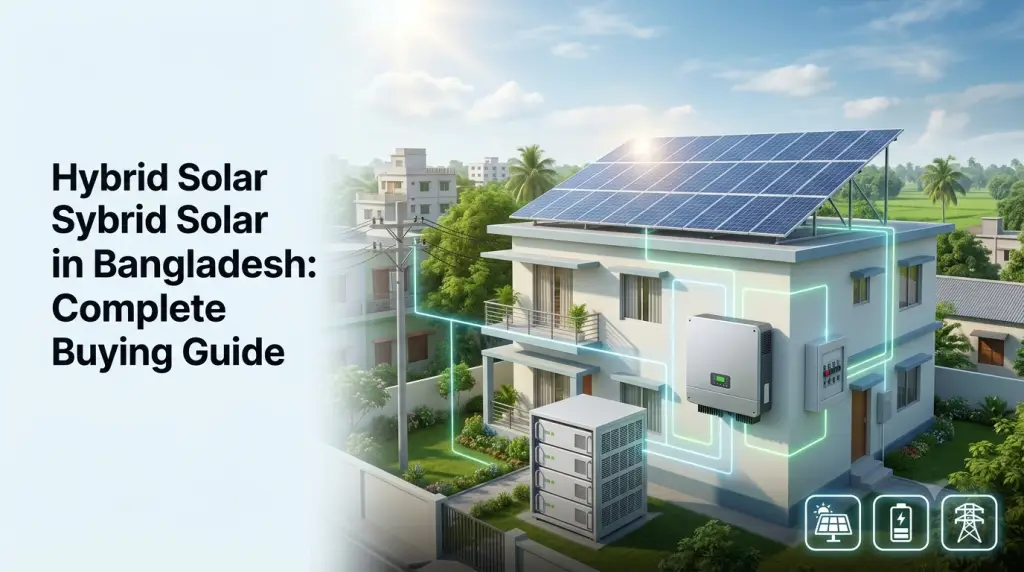
A hybrid solar system integrates photovoltaic (PV) solar panels, a specialized hybrid inverter, battery energy storage, and a grid connection into a unified smart network.
Zero Interruption Backup: Instantly switches to battery reserves during blackouts without resetting sensitive electronics.
Net Metering Eligible: Export excess daytime generation back to the national grid under SREDA guidelines to offset evening grid consumption.
Optimized Self-Consumption: Prioritizes free solar energy first, battery storage second, and utility power last.
To understand how energy moves through a hybrid setup engineered by Universal Engineering BD, here is the power distribution breakdown in order of priority:
Solar Direct Power: During daylight hours, electricity generated by the solar panels directly powers connected household or industrial loads.
Battery Reserve Storage: Any excess energy not consumed by active loads is immediately routed to charge the battery bank.
Net Metering & Grid Export: Once batteries reach full capacity, remaining surplus energy flows back into the national grid to earn utility credits.
Night & Blackout Operations: When solar power is unavailable or the power grid fails, the hybrid inverter draws seamless backup energy from the battery bank.
Selecting the correct capacity ensures that your setup covers basic operating needs without unnecessary over-investment. Universal Engineering BD customizes each setup based on connected load requirements:
1 kW – 2 kW Capacity: Engineered for small residential apartments to run continuous baseline loads like LED lighting, ceiling fans, Wi-Fi routers, and televisions.
3 kW – 5 kW Capacity: Ideal for medium-to-large homes and small executive offices running 1 to 3 energy-efficient air conditioners, refrigeration, and home appliances.
10 kW Capacity: Designed for commercial spaces, corporate offices, healthcare clinics, and showrooms requiring robust multi-phase power output.
20 kW to 50 kW+ Enterprise Systems: Tailored engineering solutions for factories, cold storage facilities, textile units, and industrial compounds.
Selecting high-quality hardware ensures system longevity and reliable performance.
Tier-1 Monocrystalline PERC or N-Type Bi-facial panels (brands like LONGi, JA Solar, Jinko, and Trina).
Built with anti-reflective coated glass to maximize light absorption even during low-light cloudy weather.
Backed by standard 25-year performance warranties.
Serves as the central brain of the installation by managing incoming DC power, AC conversion, battery management, and grid synchronization.
Equipped with built-in MPPT trackers, pure sine wave output, auto-switch transfer protocols, and Wi-Fi monitoring modules.
Tubular Lead-Acid: Reliable traditional option for basic budget setups requiring standard backup power.
Lithium Iron Phosphate (LiFePO4): High-performance storage offering 10–15 years of operational life, deep discharge limits (80–90% DoD), rapid charging cycles, and low maintenance.
Structural mounting built from hot-dip galvanized steel or heavy aluminum to withstand seasonal high winds and heavy rain.
Comprehensive balance of system gear including surge protection devices (SPD), circuit breakers, earthing kits, and outdoor-rated UV copper cables.
For factories and enterprise facilities, energy management goes hand-in-hand with outdoor security and fire compliance:
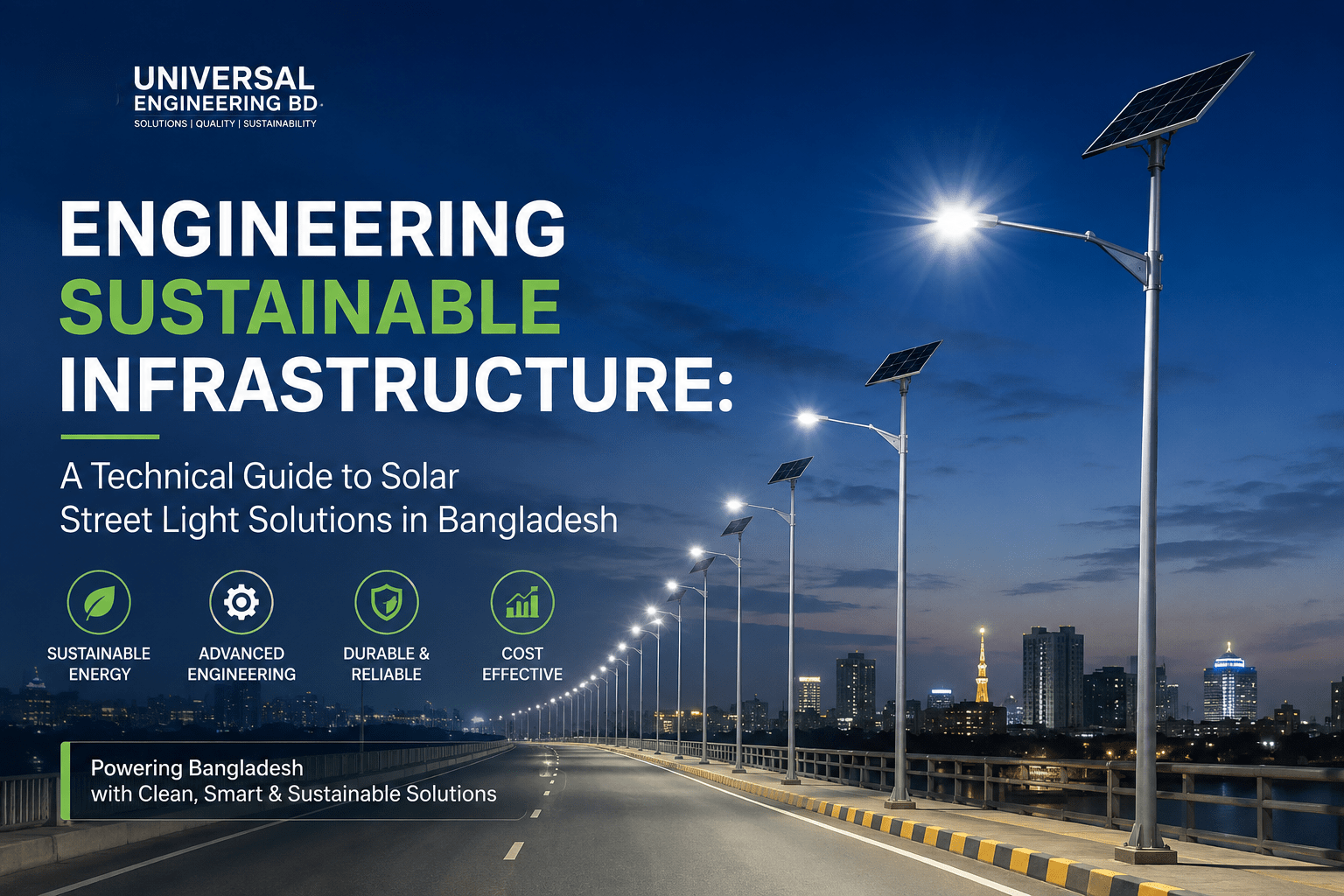
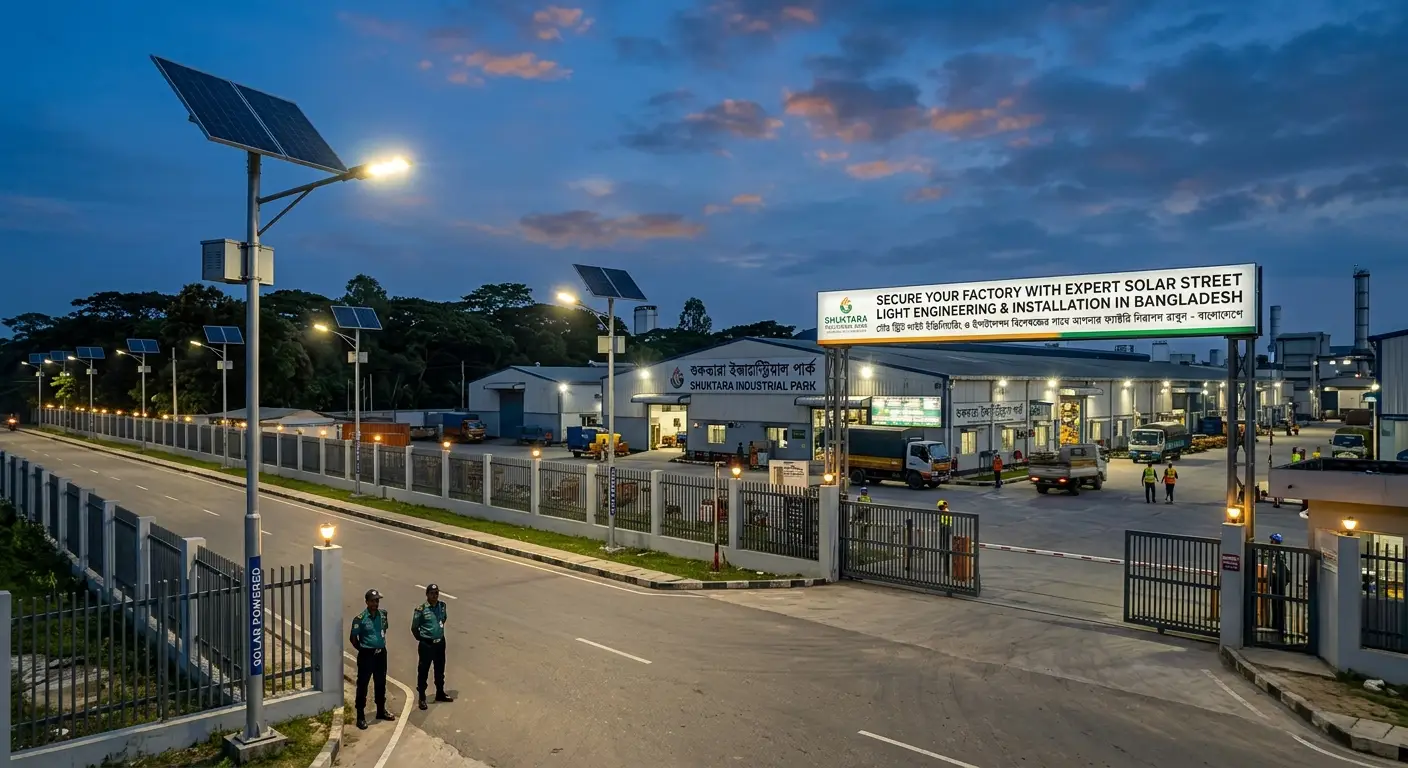
Perimeter Illumination: Ensure continuous perimeter outdoor security during total power failure by pairing your main hybrid solar setup with specialized Solar Street Light Sales and Services. For an in-depth breakdown on outdoor setups, read our guide on Affordable Solar Street Light Sales and Services in Bangladesh.
Industrial Safety Compliance: Combining resilient solar power with robust fire suppression systems ensures complete facility compliance during international audits. Learn more about our specialized Fire Fighting System Installation in Bangladesh for Industries.
Before executing your solar transition, make sure to evaluate the following:
Conduct a Site & Load Audit: Analyze peak operating hours versus required backup duration to correctly size both inverter capacity and battery storage reserves.
Check Unshaded Roof Space: Verify adequate, unshaded rooftop clearance facing south or southwest for maximum daily solar exposure.
Work with SREDA-Certified Installers: Choose experienced EPC contractors like Universal Engineering BD to handle engineering calculations, installation safety, and net-metering paperwork.
Inspect Mounting & Electrical Safety: Confirm that framing anchors are securely installed on roof slabs and that surge protection devices are integrated into distribution panels.
A hybrid solar system offers an effective combination of reduced energy overhead, operational reliability, and perimeter resilience for properties across Bangladesh.
By pairing Tier-1 components with engineering expertise from Universal Engineering BD, you turn recurring electricity costs into an efficient, long-term power asset. Contact Universal Engineering BD today to schedule a site evaluation and receive a tailored solar engineering proposal.